Skip to content

ASTM D3078
Bubble Emission Leak Testing

Standard Test Method for Determination of Leaks in Flexible Packaging
by Bubble Emission

Background

A leak test analyzes packages for leaks, whether through material defects (holes) or channels at seals. During this test, the package is placed within an enclosed chamber and submerged under water.  A vacuum is pulled on the chamber, causing the package to expand and pressurize.  The sample is then observed for bubbles leaking out of the package.  Anecdotally, bubble leaks are often observed with a 100u or larger hole size.  If better sensitivity is needed, then ASTM F2095 would be more appropriate. 

Where Used

This method is used in quality control to verify package integrity.  This method is considered good for characterizing gross leaks in packages that contain some level of headspace gas.

Description

  • The sample is placed in the chamber
  • A controlled vacuum is applied
  • The technician observes
    for bubbles coming from the sample
  • Please visit the ASTM website
    for more details on ASTM D3078.
Related Instrument

The Dansensor LeakPointer H2O was engineered for ease of use and has the following features: ergonomically designed for operator safety and convenience, mounted pneumatic lid – opens/closes effortlessly with no messy dripping, an adjustable vacuum range from -50 to -800 mbar, fast (<1 min) vacuum generation with compressed air (no electrical connection or external vacuum pumps required), easy-to-clean tub with a drain line that can be orientated in front or back of the instrument.
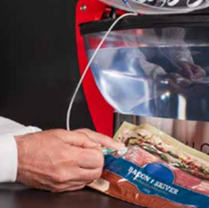
Note
For challenging packages that have little or no headspace, the LeakPointer H2O has a “balance hose” option that allows
room air to fill the backage, while under test.  


Download the ASTM D3078 Note

Recent News

Q3 Permeation Newsletter
Testing full packages – including seals and closures – for gas transmission rate is essential to assess barrier performance and ensure product stability. These tests measure how much oxygen, water vapor or carbon dioxide permeates through packaging materials.
Safeguarding Beverage Quality
Food and beverage safety begins with clean carbon dioxide (CO₂). In the beverage industry, quality is essential and behind the scenes, CO₂ plays a vital role in carbonation. Yet, when its purity is compromised, the impact can extend well beyond taste.

Testing Nonwoven Materials Through WVTR
Nonwoven materials – characterized by their web-like structure and production without weaving or knitting – have found widespread application in various industries, including healthcare, packaging and filtration. Understanding the water vapor transmission rate (WVTR) of these materials is crucial for numerous reasons.

Building the Perfect Package Webinar
With our Lab Manager, Joel Fischer, discover how whole package testing is essential for ensuring product shelf-life and overall performance of the entire packaging system.

How We Help Improve Healthcare Packaging
The healthcare industry is one of the largest and most intricate sectors globally, generating over $30 billion annually (a figure projected to double by the mid-2030s). This expansive industry impacts practically everyone – from cutting-edge implantable tech to contact lenses to medications.
Q4 Permeation Products & Services Newsletter
The thickness of a bottle wall plays a critical role in determining its effectiveness as a permeation barrier. Permeation can impact shelf life and product quality. By increasing bottle thickness, manufacturers can enhance barrier properties.