Transmission Rate (TR) Testing – measures the amount of test gas (oxygen, water vapor or carbon dioxide) that passes through a material via permeation. Some materials are designed to be highly breathable (high transmitters), while other are designed to be excellent barriers (low transmitters).
The specific barrier requirements for a package can vary greatly depending on the industry, need, and application. Given the variety of materials and TR ranges, there are also a variety of test methods utilized to ensure optimum measurement accuracy.
Transmission Rate Testing Overview
Permeation Poster Download
Transmission Rate (TR) Testing – measures the amount of test gas (oxygen, water vapor or carbon dioxide) that passes through a material via permeation. Some materials are designed to be highly breathable (high transmitters), while other are designed to be excellent barriers (low transmitters.) Given the variety of materials and TR ranges, there are also a variety of test methods utilized to ensure optimum measurement accuracy.
Below are tables for oxygen, water vapor and carbon dioxide transmission rate test methods. If you have any questions about the most appropriate test method for your material,
please reach out to our Laboratory for guidance.
Oxygen Transmission Rate (OTR) Testing
|
Test Method
|
Typical Samples
|
Analysis Range
cc/(m2 × day)
|
|
ASTM D3985 - OTR of dry film and sheeting using a coulometric detector
|
Food, pharmaceutical, medical device and electronics packaging
Research materials including: compostable & recyclable blends and new biomedical materials
|
0.005 to 2000
Note: Barrier measurements down to 0.0005 cc/(m2 × day) are possible with our 10X testing equipment
|
|
ASTM F1927 – OTR of dry films and sheeting with addition of controlled humidity using a coulometric detector
|
|
ASTM F2622 – OTR for higher transmission rate films and packages using an electrochemical (non-coulometric) detector
|
Breathable films (produce) and high transmission rate biomedical materials
|
0.4 to 144,000
|
|
ASTM F3136 – OTR of very high transmitters using a fluorescence detector. These can be films or leaky packages
|
Porous, perforated and high transmitting (non-hermetically coated) compostable materials
|
100 to 1,000,000
|
|
ASTM F1307 – OTR through package samples
|
Bottles, trays, tubing, vials, pouches
|
0.00003 to 1 cc/day
|
Water Vapor Transmission Rate (WVTR) Testing
|
Test Method
|
Typical Samples
|
Analysis Range
g/(m2 x day)
|
|
ASTM F1249 – WVTR of film materials using a modulated IR detector.
Note: Our MOCON laboratory offers a modified version of this test to analyze package samples.
|
Food, pharmaceutical, medical device and electronics packaging
Research materials including: compostable & recyclable blends
|
0.005 to 1000
Note: Package WVTR test range from 0.00003 to 0.5 g/day
|
|
ASTM F3299 – WVTR of high barrier film materials utilizing a P2O5 detector
Note: Our MOCON laboratory offers a modified version of this test to analyze package samples.
|
Electronics, pharmaceutical, medical device and high barrier materials
|
0.00005 to 5
(0.05 to 5000 mg/(m2 x day))
Note: Package WVTR test range from 0.0003 to 025 mg/day
|
|
ASTM E96 – WVTR of film materials using a gravimetric methodology
|
High transmitting, porous and perforated films and coated paper
|
0.5 to 10,000
|
|
ASTM D6701 – WVTR through high transmission rate materials
|
Breathable and non-wovens materials, such as building wraps and skin contact products
|
500 to 100,000 g/(m2 × day)
|
Carbon Dioxide Transmission Rate (CO2TR) Testing
|
Test Method
|
Typical Samples
|
Analysis Range
cc/(m2 × day)
|
|
ASTM F2476 – CO2TR of film and package samples
|
Food, pharmaceutical, biological and medical device materials and packaging
|
1 to 80,000
Note: Package CO2TR test range from 0.005 to 40 cc/day
|
Films
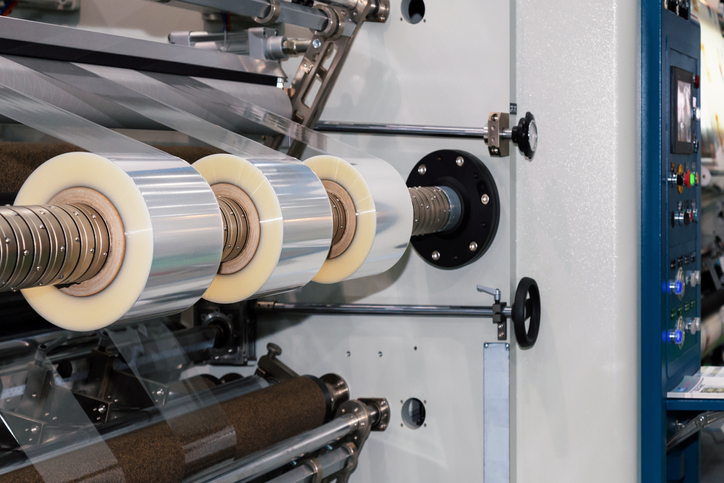
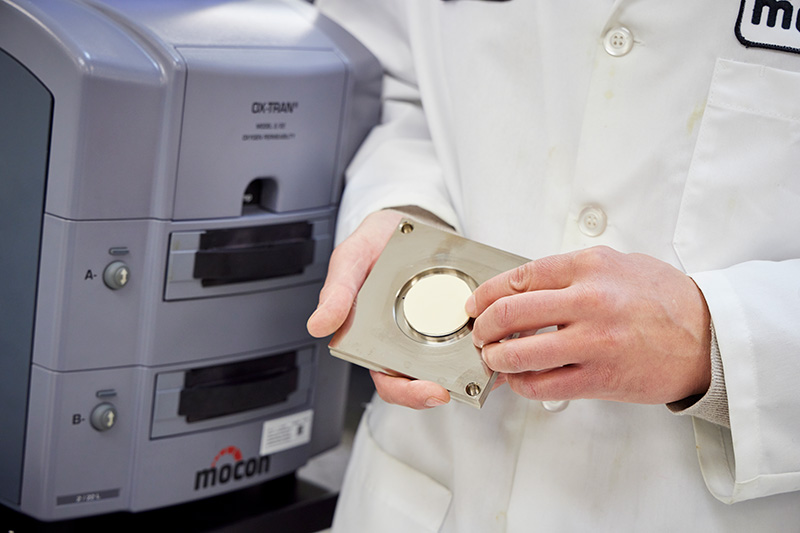
Film samples come from rolls of sheeting or are sectioned from a package wall (pouch, tray or bottle). We test film samples in duplicate. The minimum material required is two 4” x 4” (approximately two 10x10 cm) pieces.
Note: A typical 8.5” x 11” size sample works well to supply enough material for each sample and extra material is preferred for test optimization purposes.
If samples cannot be produced large enough to mount into the standard 50 cm2 test cell, testing can still be performed, but the sensitivity and range of measurement will be impacted.
|
Packaging
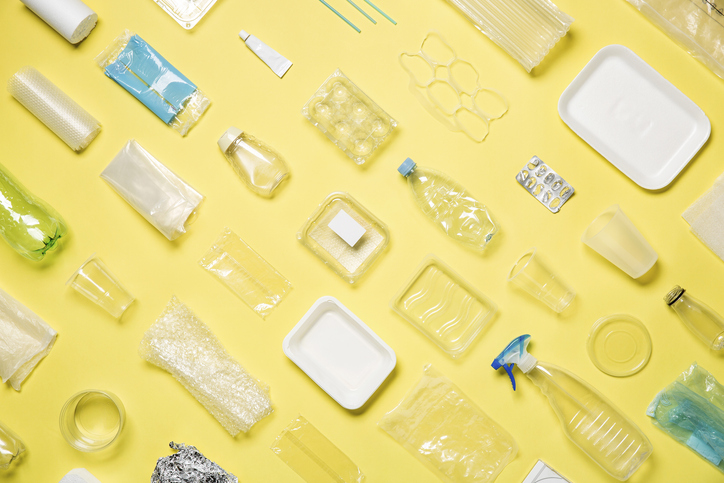
A package is anything that is not a film. Testing focuses on measuring gas transmission through walls and seals of the package to capture ingress rate (such as O2 entering a package) or egress rate (such as water loss). A typical sample could be a bottle or a bottle with a closure applied.
We analyze packages as singles, but testing multiple samples enables better understanding of the transmission rate values of a particular package configuration. This is important when seals and closures are incorporated into the measurement.

|
Note: Please label your samples
Use a sharpie or other soft-tipped marker to avoid damaging or imprinting the sample. Place the Sample ID along an edge (for film testing) and away from the specific area to be analyzed.
If possible, note the test gas orientation on the film. Writing “Test Gas,” “O2,” “WV” or “N2” establishes how the material is to be analyzed, as film orientation can be critical when testing multilayered materials.
Beyond transmission rate testing, we offer a variety of other testing services that are critical to package R&D and the shelf life testing process.
|
Test Method
|
Typical Samples
|
Analysis Range
|
|
Headspace %O2
(and %CO2
if requested)
|
Modified Atmosphere Packaging (MAP)
Food, pharmaceutical and medical device
|
0 to 100% O2
/CO2
|
|
Headspace %RH
|
Modified Atmosphere Packaging (MAP)
Medical device, electronics, pharmaceutical
|
0 to 97%RH
|
|
Film Thickness Measurement
|
Pouch and film structures
|
1 to 500 mil
25 to 12,700 micron
|
| Burst Testing (restrained) via ASTM F2054 |
Food, medical device and pharmaceutical pouches and trays |
10-5000 mbar (0.15 to 72.5psig) |
| Burst Testing (unrestrained) via ASTM F1140 |
Food, medical device and pharmaceutical pouches and trays |
10-5000 mbar (0.15 to 72.5psig) |
| Package Integrity (Pressure Decay/Leak) via ASTM F2095 |
Food, medical device and pharmaceutical pouches and trays |
Pressure decay range is customized per sample set-up using known control leak samples |
|
Gelbo Flex Conditioning following ASTM F392 methodology
|
Film samples to be used for food, medical device or electronic packaging
|
NA – this is a conditioning / material stress method often followed by permeation testing
|