What temperature should I use for
transmission rate testing?
This is a common question received by our permeation testing laboratory experts. It's difficult to answer, as temperature directly relates to the measured transmission rate value. Higher temperatures mean more energy is released for faster equilibrium times and higher transmission rate values.
While many labs start by testing at real-life storage conditions, it’s often necessary to determine how a material or package performs at higher or lower temperatures. This is where predictive modeling prove useful. Below is a graph of polymer film tested for OTR at various temperatures. Note the curved line, which makes it difficult to make accurate transmission rate predictions at higher temperatures.

As a “rule of thumb,” transmission rates double for every 10°C increase in temperature. This increase is referred to as an Arrhenius relationship; graphing the data with an Arrhenius plot (lnTR vs 1/Temp K) produces a much more linear relationship, and can be a powerful predictive tool for estimating transmission rates at other temperatures.
Read the full article to learn the full details of this case study, our best practices for predictive modeling with Arrhenius plot data, and the most common recommendations we make to customers regarding temperature.

Resources
New application notes available (click images below).
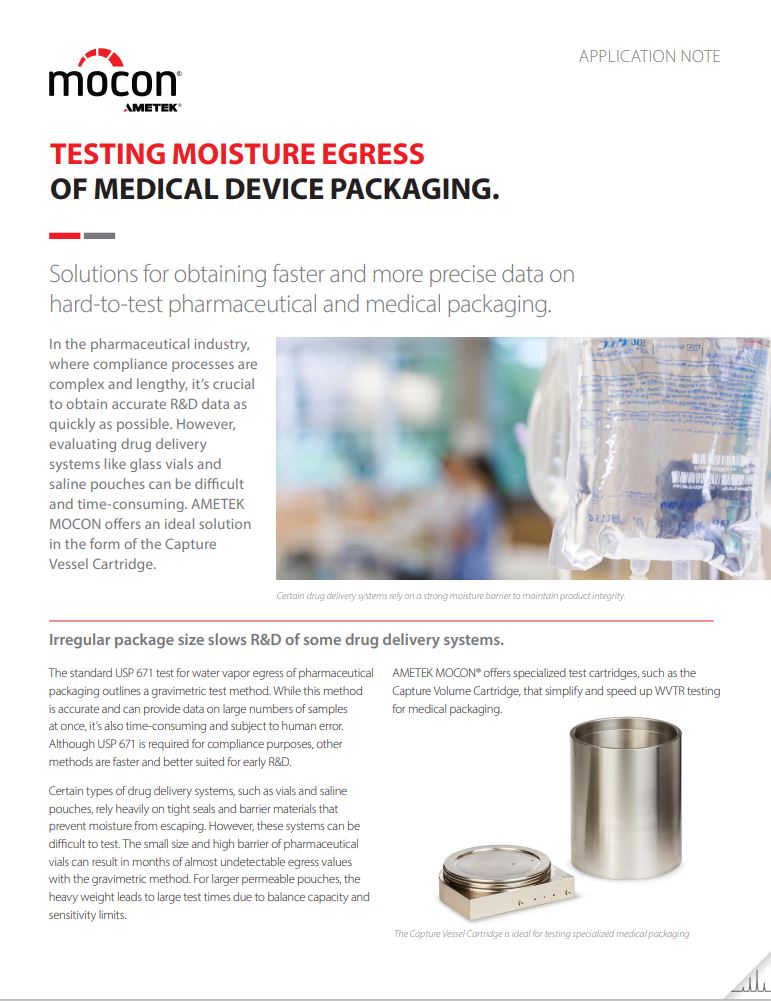
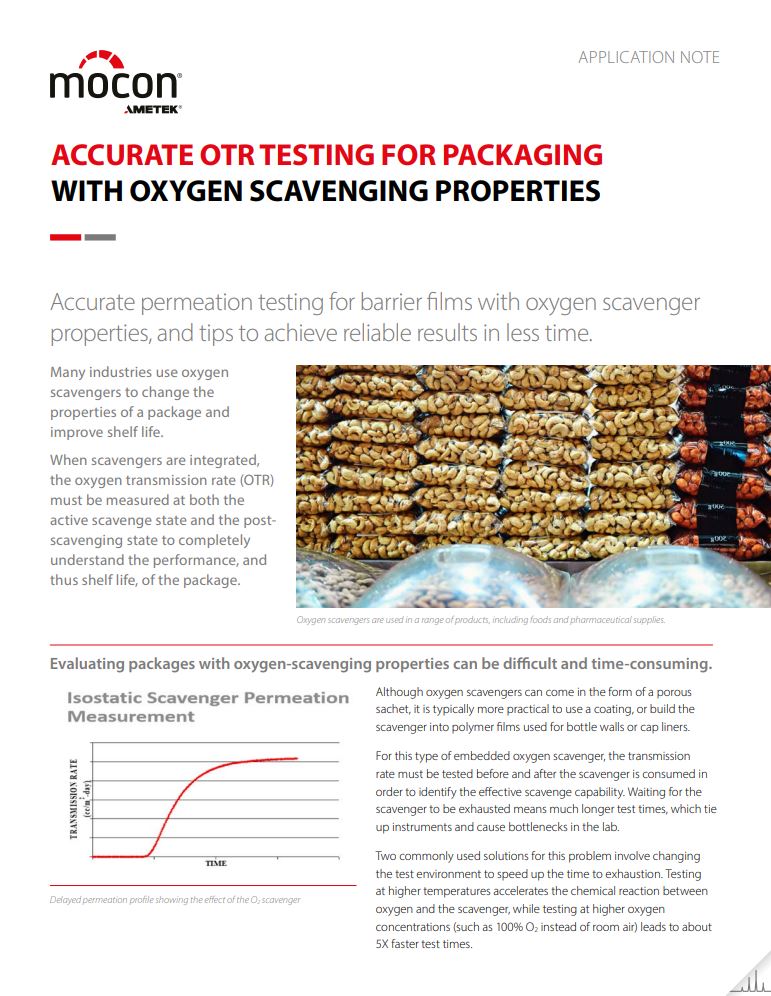
Questions about our lab testing services? Visit the updated webpage, now with comprehensive documentation of transmission rate test methods.
Events
There are no more events currently scheduled for 2023. Stay tuned for our upcoming lists of shows in 2024!
Events