Carbon dioxide doesn’t behave like oxygen or water vapor – it’s often more soluble and diffusive in polymers. That difference makes CO2TR testing essential wherever CO2 either preserves quality (e.g., MAP food packaging, carbonated beverages) or threatens it (e.g., medical and pharmaceutical products).
Our paper explains how CO2TR insights help beverage brands protect carbonation and diagnose leakage paths in bottles and closures; guide food/MAP teams in selecting films that maintain headspace balance; and enable healthcare companies to prevent pH drift and protein instability in IV bags, biologics pouches, and diagnostic systems.
We also outline how CO2TR is measured – from film testing (ASTM F2476) on instruments like the PERMATRAN-C 4/30 to whole package evaluations (analogous to ASTM F1307) that capture seals, closures, and fitments. The end result is data you can trust to optimize materials, validate package integrity, and model shelf life with confidence
Want the technical details, instrument setup and example configurations? Read the full white paper below for methods, sample prep and application-specific guidance.

Testing an Unknown Sample
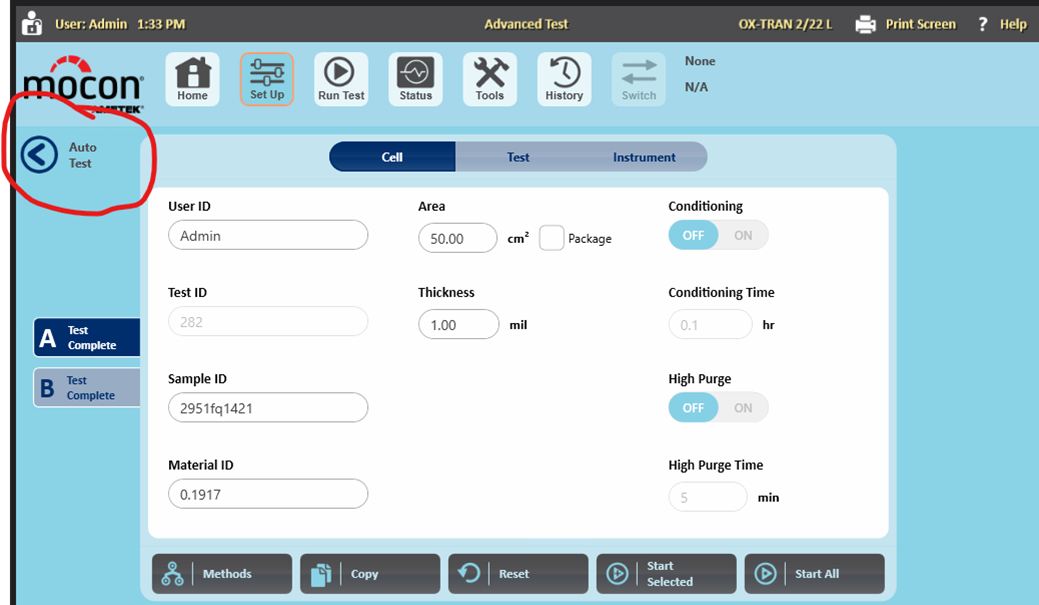
Setting up a permeation test for a new sample type can be challenging; especially when you don’t have prior data on the time to equilibrium or transmission rate. At MOCON test lab, where we run thousands of tests for customers worldwide, we encounter this situation often.
To address it, our engineers developed the AutoTest function. Unlike the standard Advanced Test function, AutoTest automatically adjusts test parameters as the test progresses based on the sample’s behavior. It begins with conservative settings typically used for high transmitters, and if results indicate low transmission, it modifies the parameters to better match the sample’s range.
This makes AutoTest especially valuable for R&D labs exploring new materials. However, when testing repeat or known sample types, the Advanced Test function remains the best choice to reduce overall test time.
You can access the AutoTest function from the Test Setup screen by selecting the arrow on the left side. For more information, contact your local MOCON representative.

Why Testing the Whole Bottle with Closure is Vital
When evaluating container integrity and shelf life, it’s important to test the entire packaging system – the bottle and the closure – rather than just the bottle alone. Bottle-only permeation testing is valuable for comparing barrier materials and formulations, but it doesn’t tell the full story. In real-world applications, the bottle/closure interface is often the weakest point in the system’s overall barrier performance.
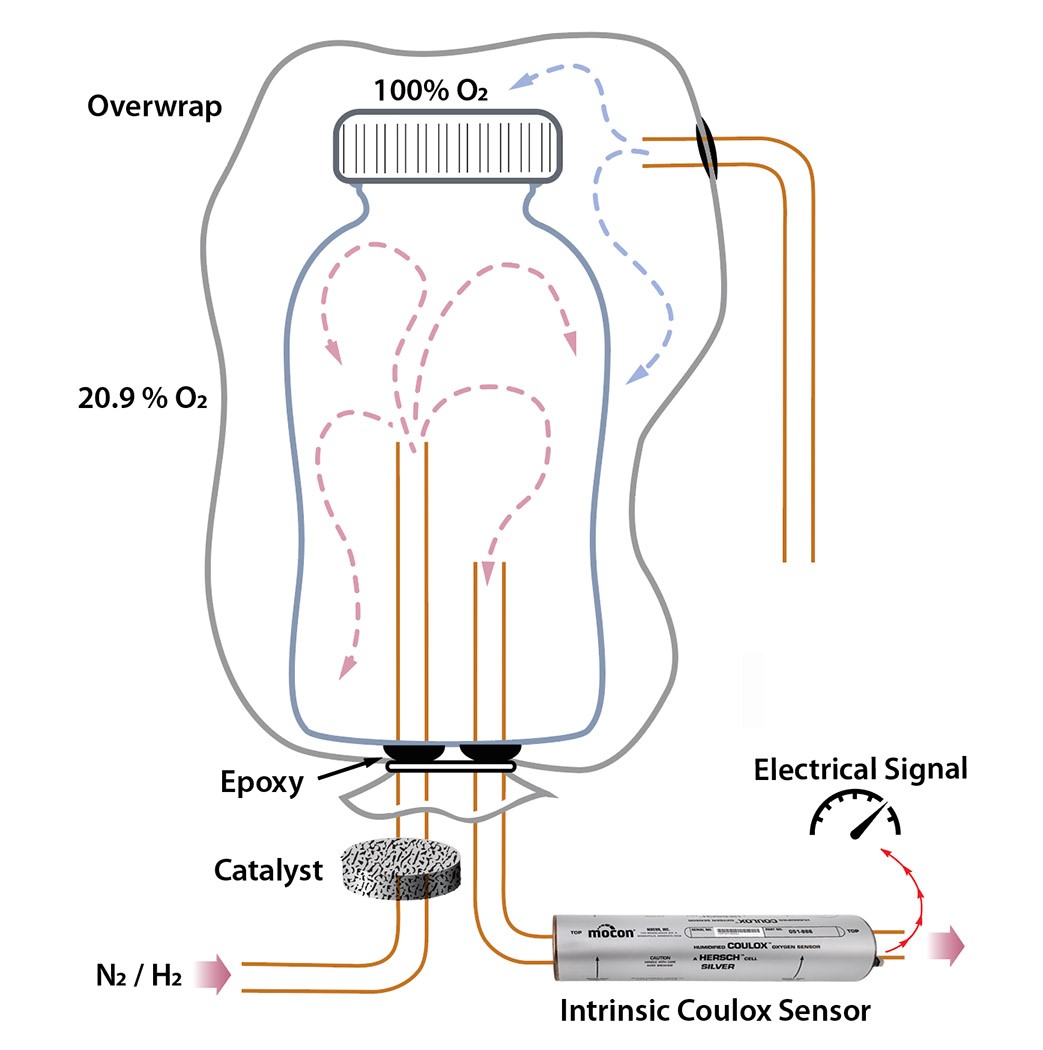
Closures play a central role in protecting product quality and preventing contamination. Even a high-performing bottle can fall short if the closure is improperly sealed. Variables such as application torque, liner composition, thread design and induction seal consistency all influence the ability to maintain a reliable hermetic seal. For global suppliers operating multiple filling facilities, maintaining consistent torque and sealing specifications is especially important to ensure uniform product quality across sites.
Whole-package testing more accurately reflects actual storage, distribution and consumer-use conditions. It helps identify potential leak paths, validates sealing performance, and provides a more realistic assessment of shelf life and product safety. Testing with the closure intact also offers greater flexibility, enabling measurement of both moisture ingress and egress – capabilities not available with bottle-only testing.
Ultimately, while bottle-only testing supports material selection, whole-package testing confirms functional integrity across the supply chain, helping brands meet regulatory standards and consumer expectations with confidence.

Recently published resources:
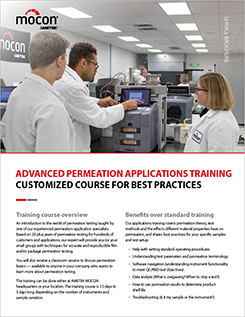
Advanced Permeation Applications Training: Customized Course for Best Practices
CO2 Transmission Rate Test Methods: Benefits for Your Application

Want to learn more? Uncover a wealth of knowledge on similar topics and industries in our Resource Library.
Upcoming Events
As "trade show season" in 2026 begins, we are excited to announce our attendance at multiple trade shows and conferences worldwide! Please see the schedule information below to check if we are located near you!
-
Location: Milwaukee, WI
- Days: April 14, April 15, 2026
- Booth Number: 201
-
Location: Green Bay, WI
- Days: Monday, April 15, April 16, 2026
- Booth Number: 424
-
Location: Columbus, OH
- Days: April 26 - April 29, 2026
- Booth Number: 312
- Location: Dusseldorf, Germany
- Days: May 7 - May 13, 2026
- Booth Number: Hall 8 - Stand B-020
Follow us on LinkedIn or visit our events page to be the first to know about upcoming industry events and opportunities to learn more about our solutions.