The healthcare industry is one of the largest and most intricate sectors globally, generating over $30 billion annually (a figure projected to double by the mid-2030s). This expansive industry impacts practically everyone – from cutting-edge implantable tech to contact lenses to medications.
Given their critical role, medical device and pharmaceutical packaging must be carefully designed to perform as intended and maintain integrity and efficacy throughout distribution. Environmental factors such as oxygen, water vapor and microbial contamination can compromise product effectiveness and endanger patients.
Ensuring robust packaging solutions is paramount to safeguarding both product quality and patient safety. This is where AMETEK MOCON leverages five key differentiators to set the industry standard for protecting medical devices and pharmaceuticals:
- Barrier Performance
With sustainability a bigger concern for consumers, packaging companies are experimenting with new types of materials that are more recyclable and compostable than traditional medical packaging. Still, companies are limited in what they can do because of the industry’s rigorous regulatory standards, often requiring extremely low permeability to oxygen and water vapor to ensure product efficacy. While food packaging (think, potato chip bags) permits a relatively high amount of oxygen permeation, healthcare packaging for pharmaceuticals often requires significantly lower oxygen permeability to maintain safety and efficacy.
Testing at such low transmission rates is a challenge (as our planet is awash in oxygen), but AMETEK MOCON testing equipment can measure the lowest oxygen transmission rate levels in the industry. Permeation testing instruments must be meticulously engineered to prevent environmental oxygen leakage, which compromises the accuracy of the analysis. This requires an intricate and highly sealed test system, one that MOCON actually pioneered.
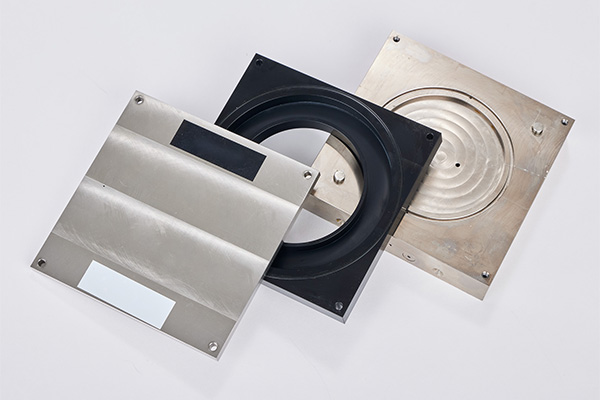
A key innovation in our permeation testing instruments is the use of cartridges. These allow people to mount barrier material samples quickly and reliably for repeated testing without needing complex manual assembly. They also allow the user to perform multiple tests with a single instrument, maximizing cost savings and efficiency for customers.
Similar issues occur when testing water vapor transmission: Lab humidity can skew the results if the testing equipment isn't designed to minimize (if not eliminate) external interference.
- Package Testing
After confirming that the packaging material is effective, the focus shifts to its design and assembly. Even the best materials can't guarantee product integrity if the package leaks due to design or assembly flaws. Our package testing instruments measure critical packaging parameters to help ensure that a medical product remains safe and effective.
Whether packaging a medical device or a medication, many healthcare packages consist of multiple bonded components (adhered by glue or heat). Our instruments rigorously test these seals to ensure they remain secure, preventing gas ingress or egress that could compromise the product's safety and effectiveness.
Our bubble emission testing equipment detects overall packaging leaks by immersing the package in water, creating a pressure differential and observing for escaping bubbles. A key advantage of this method is its ability not only to identify the presence of a leak but also to pinpoint its exact location. This insight allows package designers to focus on specific areas of the design that need improvement.
Some leaks are too small to produce bubbles but large enough to let bacteria penetrate the package and contaminate the product. To detect these types of leaks, we inflate and add pressure inside the package. We then hold that pressure and monitor for any drop over time. This pressure decay test can identify holes as small as one-tenth the diameter of a human hair!
This same instrument can also measure a package's burst strength, a critical factor for packaging exposed to varying altitudes during shipping, such as over mountain ranges or in unpressurized aircraft cargo holds. When a package’s internal pressure exceeds the external air pressure, it must withstand the difference without failing. Our burst testing tools simulate these pressure differentials to identify design or assembly flaws that could lead to failure during transit.
- Headspace Verification
Some medical supplies and pharmaceuticals require a controlled atmosphere within their packaging. Simply keeping oxygen or water vapor out may not suffice – replacing these gases with an inert gas like dry nitrogen may be necessary. Maintaining this Modified Atmosphere Packaging (MAP) is critical to ensure the protective atmosphere remains intact throughout shipping and storage, preserving the product until it is ready for use.
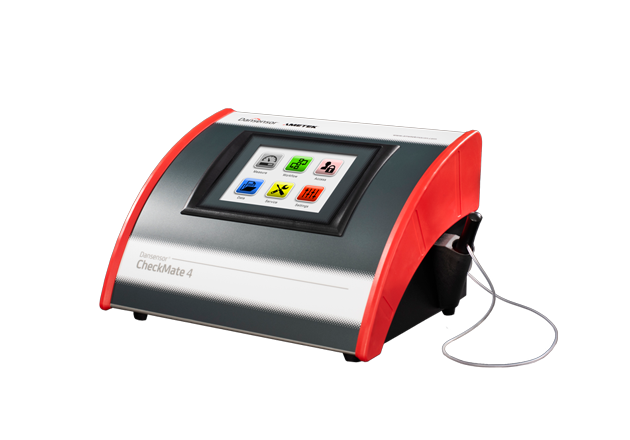
Headspace verification tests the atmosphere inside a package – either at the point of packaging or after it has been stored – to ensure the modified atmosphere remains intact and does not leak out or allow oxygen in. Product like the CheckMate 4 and CheckPoint® 4 may be the ideal instruments for accurately testing packaging atmospheres.
- Safe Sterilization
Medical device packagers commonly use ethylene oxide (EtO) sterilization for product sterility. In this process, sealed packages are placed in a chamber filled with EtO gas, which penetrates the packaging and eliminates microorganisms to ensure that the medical devices are safe for use.
While highly effective, EtO is hazardous to human health, requiring strict safety measures. The process takes place in a sealed chamber, and after sterilization, ventilation protocols ensure all residual gas is cleared before personnel re-enter the area. These steps protect workers and maintain a safe environment.
EtO detectors play a critical role in this process, monitoring gas levels inside the room to confirm safe conditions and outside the chamber to detect potential leaks. AMETEK MOCON gas chromatographs provide precise, reliable monitoring of EtO concentrations. If levels become hazardous, the system immediately triggers alarms, enabling workers to evacuate safely.
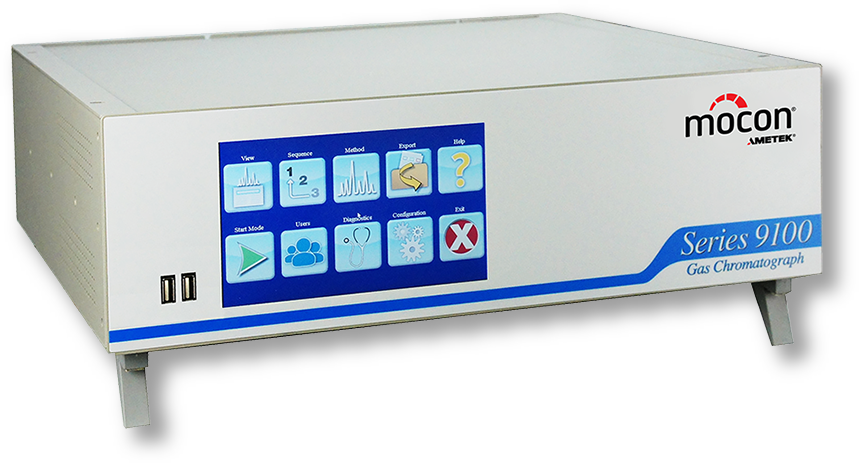
In response to tighter regulations – including a proposed EPA limit of 10 parts per billion (ppb) for indoor EtO concentrations – our sensors, capable of detecting levels as low as 1 ppb, offer an effective solution for compliance and worker safety.
-
Laboratory Services
Some companies purchase our instruments to conduct testing in their labs or on their manufacturing lines. However, MOCON also provides comprehensive laboratory services for those who prefer to outsource their testing to experts in permeation testing.
Based in Minnesota, our ISO 17025-accredited permeation testing lab is the largest in the world, staffed with experienced, highly skilled scientists.
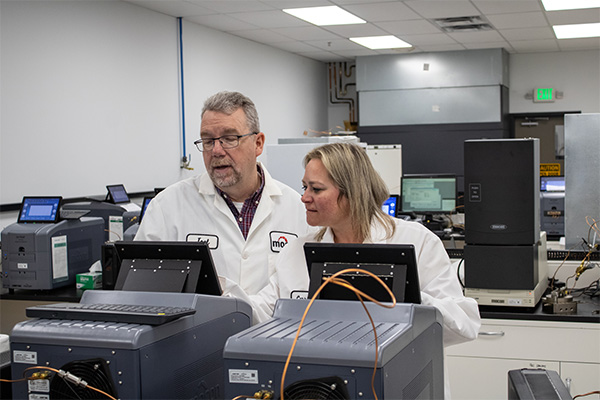
As the vast majority of our testing services are healthcare-related, we have the experience and expertise to deliver on the regulatory-driven data needed for medical device and pharmaceutical customers. Our lab can handle testing of unique or complex packaging that requires a customized setup.