How AMETEK MOCON is partnering with Iowa State University to advance green technology.
Operating the world's leading permeation testing lab often involves participating in projects that are important, innovative and undeniably interesting. Building on AMETEK MOCON's enduring partnership with Iowa State University (ISU), scientists from the Ames, IA-based institution recently sought our company’s support in a pioneering initiative to enhance energy efficiency and sustainability in the plastics industry.
Plastic production and usage are major contributors to environmental problems. Plastic is made by processing oil. Extracting oil from the ground, transporting it, processing it into different types of plastic and molding those plastics into goods are energy-intensive processes. These processes are even more harmful when used to make single-use plastics such as grocery bags, product packaging, and even drinking straws and restaurant containers.
This is because plastics are often thrown away and end up in landfills, where they can take anywhere from 10 to 1,000 years to decompose, releasing greenhouse gases such as carbon dioxide and methane into the atmosphere. Indeed, 72% of the plastic made ends up in landfills or the environment, according to a 2022 Organisation for Economic Co-Operation and Development report. Nineteen percent was incinerated and just 9% of the plastic ever produced has been recycled. But what if plastic wasn't made entirely from oil?
According to Dr. Keith Vorst, a professor at Iowa State and the director of ISU’s Polymer and Food Protection Consortium, there’s a big push underway to replace traditional polymers with new, more environmentally-friendly materials, using a combination of post-consumer recyclables (PCRs) and greener alternatives derived from food waste (i.e., bio-fillers).
"Landfill-diverted food-grade materials can be rail-shipped, which is preferable from a greenhouse gas perspective,” Dr. Vorst said. “[Bio-fillers] are readily available and can minimize the use of first-pass bioplastics. Using them saves energy costs and reduces greenhouse gas emissions. If you can package products with PCRs and bio-fillers instead, you can potentially reduce costs."
Agricultural by-products such as coffee chaff, rice hulls and cotton stalks make ideal landfill-diverted bio-fillers due to their year-round availability, low cost, low density and abundance. Dr. Vorst and his team are pioneering methods to repurpose these waste matters for plastics manufacturing purposes. By integrating a combination of PCRs and specially-processed biomass as fillers in plastic production, less actual plastic per product is necessary, thereby reducing overall oil consumption.
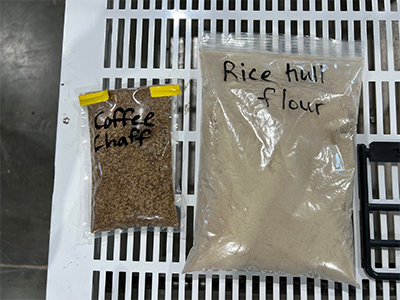
At the moment, however, bio-fillers only comprise a small amount of sustainable packaging. Sustainable packaging is often a 50/50 mix of PCRs and “virgin plastic.” Incorporating materials from previously used products gives new life to old packaging and, in doing so, helps decrease waste, conserve resources, and reduce carbon emissions. This approach supports a circular economy by promoting the reuse of materials, minimizing the need for “virgin plastics” and fostering a more sustainable future for manufacturers and consumers.
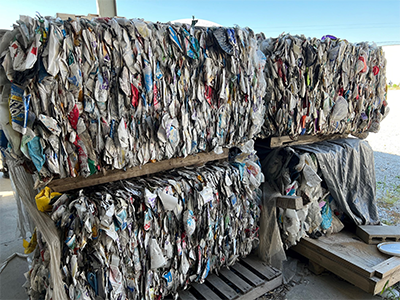
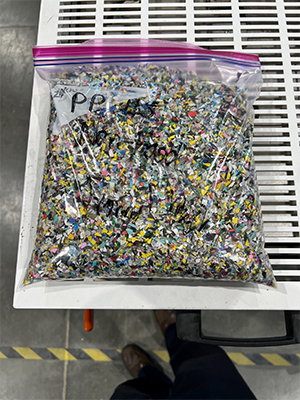
The two groups sought to test the performance properties of bottles comprised of landfill-diverted post-consumer plastics and food grain agricultural byproducts. It manufactured bottles with 50/50 PCRs with varying concentrations (from 1% to 5%) of bio-fillers. According to Vorst, a few years ago, brand owners didn't care for the recycled packaging at first because they thought it made the products look cheap. Now, however, they seek out these greener packaging materials because consumers understand that is more environmentally friendly.
“If we add in PCRs and bio-fillers to reduce the amount of ‘virgin plastic’ used in these bottles, does this new ‘green packaging’ still hold up?” said Joel Fischer, manager of the world’s largest permeation testing lab at AMETEK MOCON. “Does it keep liquid from permeating out at the same rate? Or will it break down because there is something wrong now?”
The potential implications of this project are profound, promising energy savings, waste reduction and a potentially significant decrease in plastic’s environmental impact. However, products made using this novel approach must still meet rigorous functional requirements, particularly in applications such as food packaging, where maintaining freshness for the lifespan of the product is crucial.
For the ISU professors, understanding the properties of their agricultural waste-based plastic formulations is essential to tailoring them to packaging needs. MOCON advanced testing instruments can evaluate the barrier properties of their new plastic formulation, ensuring it meets stringent packaging standards and empowering ISU to drive positive change.
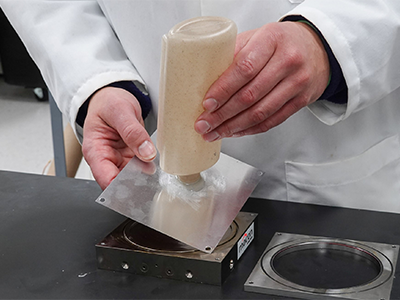
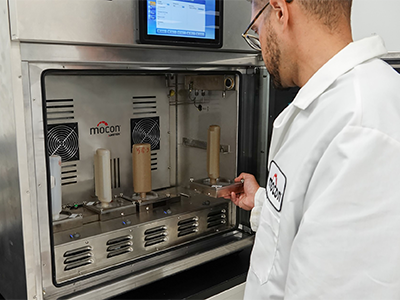
This partnership not only promotes sustainability, but also provides Iowa State students with invaluable hands-on experience, preparing them to drive future green innovations. AMETEK MOCON is proud to support such initiatives and help pave the way for a more sustainable future.
[MOCON has] a great reputation for package performance testing,” Dr. Vorst said. “Everyone knocks MOCON off; but if you're going to go with a tester, go with the industry standard. There are lots of 'Fauxcons,' but only one MOCON."