Many of the homes left standing were damaged by smoke. Residents of these homes were concerned about the long-term health effects of the smoke and pollutants, especially because they felt there was a lack of guidance about safety or cleaning procedures.
To help arm residents with more knowledge, a team of researchers from University of Colorado, Boulder began immediate efforts to measure air quality in these smoke-damaged homes. Key to this research was an innovative tool called a Y-Pod; Hannigan Research Group, a lab at CU Boulder, developed it as a lower-cost solution to air quality monitoring.
“When the fire broke out, there was an immediate need to get sensors into homes and see the impact - piD-TECH sensors came in at the top of our list.”
– Evan Coffey, CU Boulder
The Y-Pod is composed of several sensors of differing technologies for the most comprehensive data possible. A crucial early component of the Y-Pod was the
piD-TECH® eVx sensor, a plug-in photoionization sensor available in multiple detection ranges. They’re ideal for monitoring
Volatile Organic Compounds (VOCs), which can be generated by combustion and are often harmful to human health when inhaled.
 The Y-Pod incorporates several different sensor technologies, including the piD-TECH photoionization sensor (leftmost).
AMETEK MOCON® donated 12 piD-TECH sensors to the research team, enabling the creation of additional Y-Pods to aid in research efforts. Researchers installed Y-Pods in 12 homes in the burn area for varying periods. They found that VOC levels in the homes were relatively normal, even in homes that were directly in the path of the fire. Homeowners were relieved to know that their homes were safe, and that pollutants left behind by the fire were short-lived.
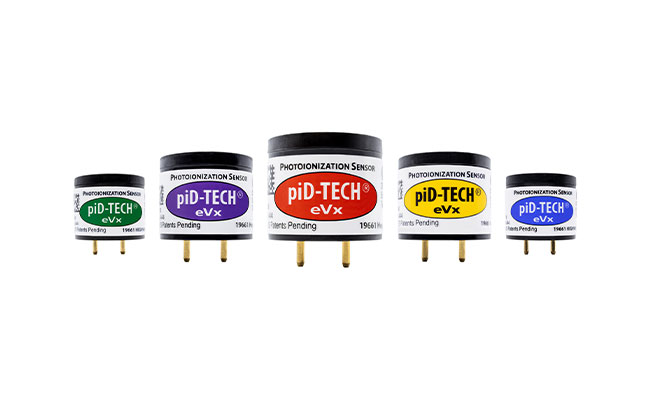 The piD-TECH eVx pod comes in several different detection ranges.
“The fact that [the piD-TECH sensor] was so easy to integrate in our pods was excellent, and made it a lot quicker to deploy everything after the wildfire.”
– Jon Silberstein, CU Boulder
The researchers also found that VOC levels in homes varied significantly with normal household activities, such as cleaning and cooking. Compared with outdoor monitoring, efforts to track indoor quality and indoor pollutant levels are relatively new. This study joins a larger push to investigate the long-term effects of combustion and pollution on air quality in homes and commercial spaces.
To download the full case study, click
here.