AMETEK MOCON
Dansensor Package Testing Products
By Rhea Healy, published in gasworld magazine | Originally published 5 April 2017 in partnership with MOCON, Inc.
Industrial gases have long been staple ingredients in the food and beverage industry. Nitrogen and carbon dioxide (CO2) are widely used in a variety of applications to chill, freeze, grind and package all sorts of products such as bakery and dairy items, beverages, seafood, fruit and vegetables, meat and poultry, and more.
Industrial gases are used in modified atmosphere packaging (MAP), a preservation technique used to counteract microbiological organism growth and extend the shelf life of food stuffs. In the beverage industry, liquid nitrogen dispenser technology creates positive internal pressure within bottles, whilst food chilling and freezing are two other conventional applications that use cryogenic industrial gases.
Intensifying global demands on the food and beverage market continually puts pressure on companies within the industrial gas industry to transport food and beverages around the world in quicker, fresher, and more visually appealing methods. This In Focus…sets out the latest trends in the sector and discovers what technologies are continuing to make this industry fizz.
Impact
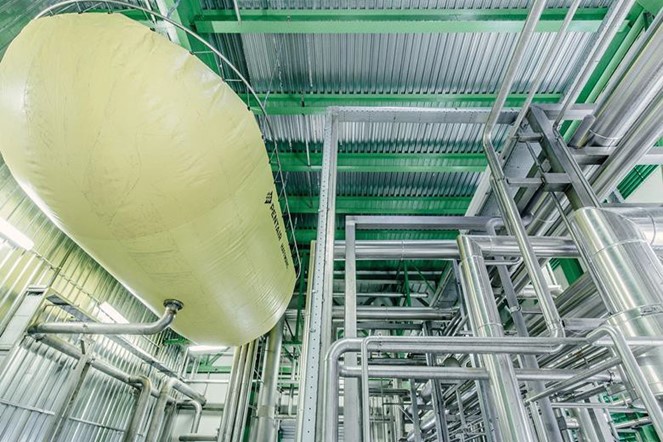
In a shock CO2 sector shake up, Pentair acquired Union Engineering in February this year. The takeover of the latter’s technologies and service capabilities complements the former’s current business activities, expanding its portfolio of CO2 technology solutions and directly benefitting the food and beverage industry.
Ivan Williams, Product Line Director CO2 & Biogas, Pentair Sustainable Gas Solutions, outlined the impact that the combination could have on the sector going forward, saying, “Union Engineering have rightly marketed themselves as world leaders in CO2 technology and their wealth of experience in engineered solutions coupled with Pentair’s sustainable focus means the market can expect forward-looking, innovative and sustainable solutions for an ever-changing world.”
As a major player in the sector, Pentair fuels the world’s food and beverage industries with solutions that help process food, beverages and manage crop yields. In terms of trends, Williams highlighted that the move towards more sustainable inventions was driving growth in today’s market. “In recent years, the large industrial gas space has seen less growth whilst the independent industrial gas space has seen more. Overall, the most growth can be seen coming from CO2 recovery in the biogas upgrading (renewable energy) sector,” he revealed.
Williams described this situation as a true win-win-win, explaining, “The biogas producers have an additional revenue stream; the decentralized nature of biogas plant locations means that logistics and transport costs are lowered for consumers; and the environment benefits from reduced emissions from the bioenergy and in terms of transportation.”
He also went on to state, “The growth in carbonated soft drinks in areas where there are no large, readily-available industrial sources means that an alternative approach needs to be taken.” In response, Pentair has created a ‘one-stop-shop’ for soft drink bottlers. The solution uses combusted fossil fuel – typically heavy fuel oil – to create electrical energy, flue gas used to recover CO2 for carbonation and heat from a combustion engine transformed to provide cooling energy in the production process.
Williams firmly believes that technological advances in the food and beverage industry will stem from the drive for sustainability, indicating, “In general, we can say that our sector wants us to be more responsible with regards to the environment as sustainable solutions. The costs of fossil fuels will continue to rise and so we can see expanding our ‘one-stop-shop’ into an even more innovative, energy efficient and sustainable solution.”
“In such an instance, biogas from the bottler’s site is used as the energy source in place of heavy fuel oil and thus providing renewable electrical and refrigeration energy and renewable CO2.”
Source: Pentair Haffmans
Evolution
US-based technology innovator MOCON, Inc. is also taking advantage of wider food and beverage applications, with a portfolio featuring analysers, inline MAP leak detection devices, and non-destructive residual oxygen and dissolved oxygen testing. Founded in 1966 with permeation transmission rate instruments as its core business, MOCON, Inc. has developed into a food and beverage technology powerhouse.
Its product offering is constantly evolving to serve surmounting applications and increasing demands from end-users in the food and beverage sector. As Steve Hill, MOCON’s Account Manager – Food Industry, explained, “Using the relatively new technology of optical fluorescence, which utilises specialised sensors depending upon the application, we are able to test products with very small headspace that were almost impossible to accurately test before the introduction of this technology.”
“With the increased need for different gas mixtures to ensure optimum shelf life, we offer electronic gas mixers and inline analysers that can monitor residual oxygen and CO2 at the point of package sealing, adjusting the flow rate and mixture of the gases in real-time for reduced gas usage and consistent package fills.” MOCON also recently released a groundbreaking Microbial Detection system which allows the rapid screening for aerobic bacteria in less than 24 hours, compared to the traditional 48-72-hour testing period.
Hill gave gasworld readers an exclusive insight into two new products that MOCON will be releasing into the market this year, adding, “The first is a portable headspace analyzer for oxygen and CO2 with a new sensor technology for longer life and increased sensitivity, as well as the latest touchscreen, data collection capabilities and wireless connectivity.”
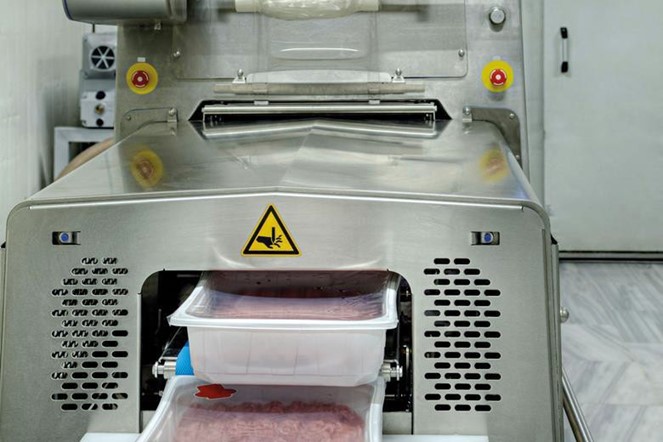
“The second,” he revealed,” which we are also very excited about, is our latest product for testing individual package seal integrity on the production line, using a modular system capable of speeds up to 90 packages per minute. Using CO2 as a trace gas, we are able to detect micro leaks below 100 microns, enhancing quality in the process.”
In terms of growth drivers, Hill identified, “I’d say our biggest growth area right now in the US is adding inline testing for residual oxygen to the traditional offline individual package testing. This trend is coming from Europe as it is more of a mature market for this type of testing. The modified atmosphere is measured right at the point of package closure and can alert the quality teams of any possible issues before a large run of packages are produced, greatly reducing rework and scrap.”
Source: AMETEK MOCON
Shifting demographics
Even though MAP techniques are now commonplace in the food packaging industry, it used to be more of a niche application in the industry, along with preservation processes like aseptic processing, irradiation and high-pressure processing (HPP), to name a few.
Now, Hill revealed, these have all become more mainstream as producers and consumers are looking for a longer shelf life, maintaining taste and appearance and lessening preservatives and supply chain changes like distribution channels, becoming more centralized.
“This has led to double-digit growth year-on-year for some of our products and dynamic growth for the packaging industry as a whole,” he stated.
Read full article at www.gasworld.com
Learn more about MAP gas analysis at ametekmocon.com